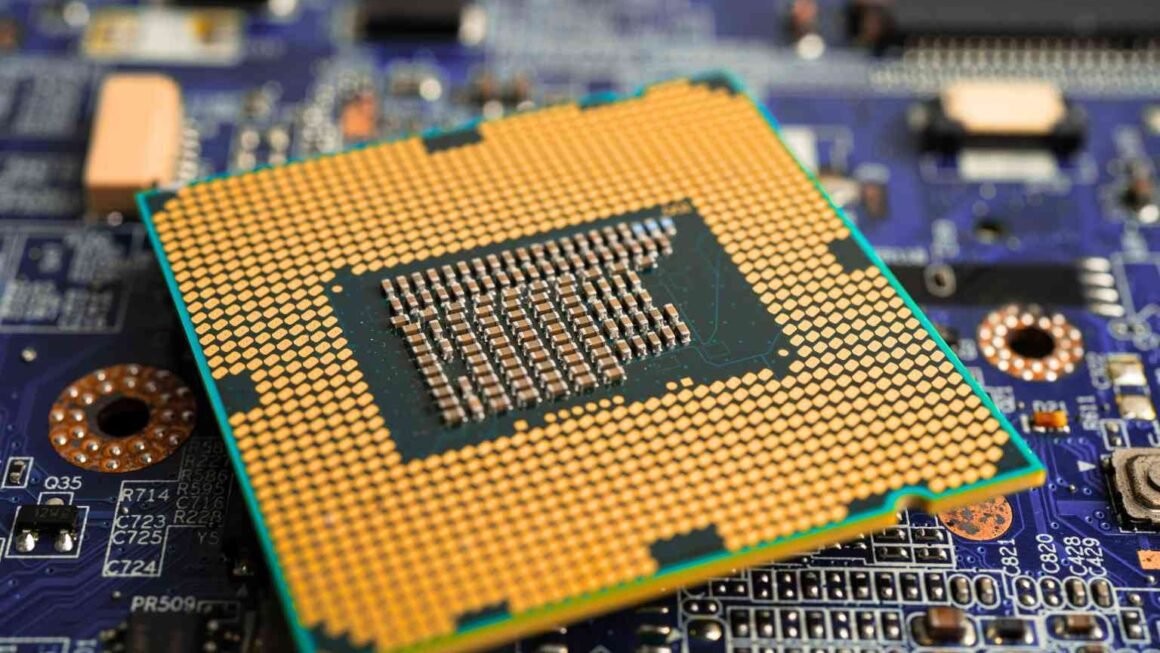
Meanwhile, as you know AI is no longer just limited to powering expensive servers or cloud compute services. TinyML, a new way to design machine learning algorithms and models, is turning the promise of ubiquitous artificial intelligence into a reality. They also are typically a combination of sensors, wearables, microcontrollers and typical IoT devices. This is where TinyML comes in. You can make intelligent decisions directly on the device without having an always on internet connection or requiring a powerful processor.
It’s a big deal because it makes AI faster, cheaper and more broadly available in the real world.
1. What Is TinyML
TinyML stands for Tiny Machine Learning. It refers to running machine learning models on microcontroller class devices like smartphones and IoT nodes with very little memory, processing power and battery life. These models are custom tailored to perform efficiently on constrained hardware.
TinyML performs AI directly on the device instead of sending all data to the cloud for processing.
2. Why Low-Power AI Matters
A number of smart appliances are battery operated and need power saving capabilities. Traditional AI models require heavy computing resources. TinyML solves this problem by miniaturizing models so that they consume very little power.
This enables AI at the device or edge.
3. Edge Computing and TinyML
TinyML is closely related to edge computing. Edge computing refers to processing data near the source of its generation rather than sending it to distant servers. TinyML processing is performed in real time on the device.
This results in lower delay and better privacy.
4. Real World Applications of TinyML
Applications of TinyML are widespread:
- Voice detection in smart speakers
- Health monitoring in wearable devices
- Predictive maintenance in industrial sensors
- Environmental monitoring systems
- Smart home automation devices
These are examples of AI working silently in the background.
5. Faster Response and Reduced Latency
Since TinyML completes tasks on device, it eliminates internet delay. Devices can respond to commands and environmental changes immediately. This real time response improves user experience significantly.
6. Improved Privacy and Security
When data is processed on the device instead of being sent to the cloud, private information never leaves the device. This minimizes vulnerability to data breaches and unwanted access.
7. Energy Efficiency and Sustainability
TinyML enables extremely power efficient AI, which is vital for battery powered devices and sensor networks. It is also environmentally friendly because it consumes very little energy.
8. Challenges in TinyML Development
Despite the benefits, TinyML has challenges:
- Limited memory capacity
- Model optimization complexity
- Balancing accuracy with size
- Hardware compatibility issues
- Need for specialized development tools
Models must be carefully engineered to run on modest hardware.
9. Implications for Internet of Things IoT Devices
The Internet of Things is growing rapidly. TinyML brings intelligence directly to IoT devices with power and cost efficiency. Sensors can detect anomalies, predict failure or act independently without cloud services.
This makes IoT systems smarter and more efficient.
10. The Future of TinyML
TinyML has a strong future as energy efficient hardware becomes more powerful. Healthcare, agriculture, smart cities and consumer electronics will see wider adoption of edge AI solutions. With improved development tools, deploying AI on small devices will become simple and common.
TinyML is enabling AI everywhere.
Key Takeaways
Wearables and smart devices can now support low power AI
It reduces dependence on cloud processing
Local computation is faster and more private
Energy efficiency makes it ideal for IoT and sensors
The next phase of AI growth will come from smarter edge devices
FAQs:
Q1. In simple terms, how is TinyML described?
It is running machine learning models on small low power devices.
Q2. What sets TinyML apart from usual AI?
Conventional AI runs on powerful servers, whereas TinyML runs directly on small devices.
Q3. Why is TinyML important?
It allows AI processing to be faster, more private and more energy efficient.
Q4. Where is TinyML commonly used?
In wearables, smart home gadgets, sensors and industrial machines.
Q5. Does TinyML require internet connection?
No, it can work offline because computation happens on the device.