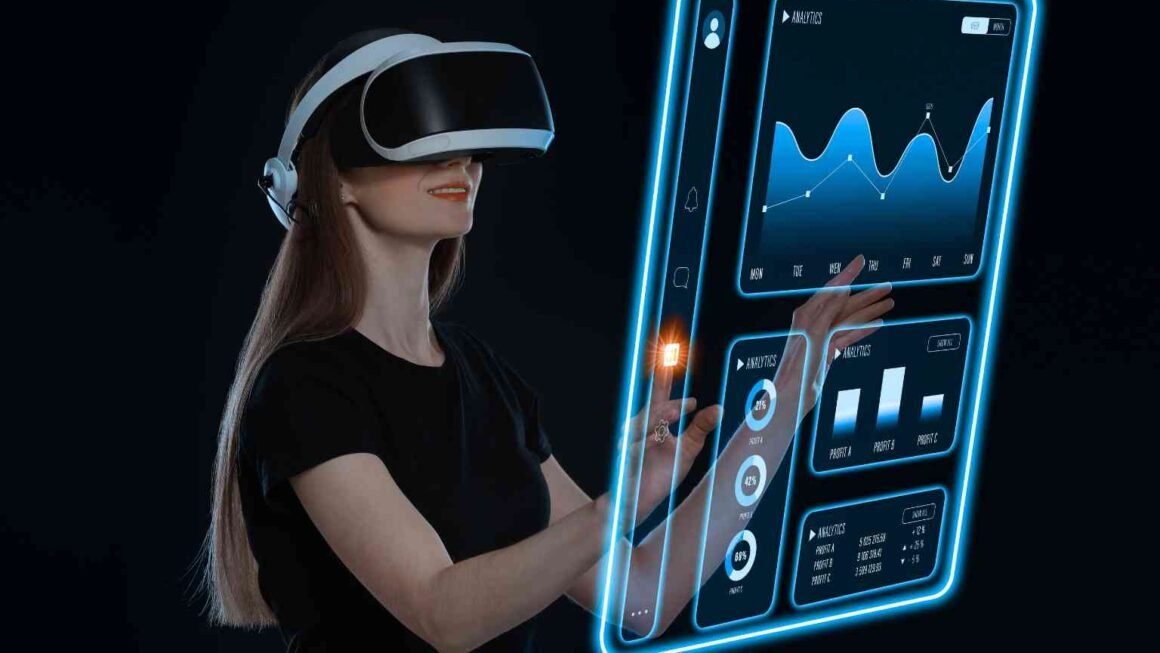
Interface tech is only the latest in a long line of evolutionary changes. We graduated from keyboards to screens, and from desktops to mobile handheld devices. Now spatial computing is starting a transformation of its own. This is an enabling technology for digital content in context and with context. Instead of looking at flat screens, reference points appear to float as 3D objects, in virtual environments and as digital overlays mixing with the physical world.
1. What Is Spatial Computing
Spatial computing is technology that meshes digital content with the physical world, via augmented reality, virtual reality, sensors and artificial intelligence. It knows space and depth, motion and environmental effects to develop interactive digital experiences.
2. Moving Beyond Screens
Screens are all important to traditional computer use. Spatial computing helps to lessen the dependency on flat screens. Instead of touching icons, people can make gestures or move as a way to reach out and interact with the virtual living spaces they inhabit.
This delivers an experience more immersive than any other kind of device.
3. Augmented and Virtual Reality Application
Augmented reality superimposes digital information onto the physical world, while virtual reality places users in fully immersive digital environments. These technologies together help power gaming, education, design and remote collaboration spatial computing experiences.
It is these technologies that are at the heart of the interface change.
4. Natural Human Interaction
Spatial computing is far closer to how humans interact and behave naturally. People walk around, look and gesture with their hands in real life. This technology applies those very same motions as input methods:
- Hand tracking for selecting objects
- Eye tracking for focus detection
- Voice commands for control
- Motion sensing for navigation
- Environmental mapping for context awareness
They feel more intuitive than clicking or typing.
5. Transforming Workspaces
Professional spaces are being remade by spatial computing. Designers can virtually mold 3D models in real time. Teams can work together in shared virtual spaces across locations. Architects and engineers are able to visualize structures before they are built.
This allows more productivity and creative freedom.
6. Impact on Education and Training
Students can interact with 3D models of complex subjects like anatomy or engineering. Training simulators offer a secure place to practice. Immersive learning promotes engagement and understanding with spatial experiences.
7. Hardware Advancements Driving Adoption
Lightweight headsets, smart glasses and powerful processors are enabling spatial computing to become more accessible. Adoption will grow as hardware gets easier and cheaper.
For something to be widely adopted, it has to feel natural and comfortable.
8. Challenges and Limitations
Spatial computing has a lot of potential, but also faces challenges:
- High hardware costs
- Privacy considerations in spatial data
- Battery and performance limitations
- User comfort issues
- Need for strong content ecosystems
Addressing these issues is necessary for growth.
9. Redefining Digital Experiences
Spatial computing enables digital content to interface with the physical environment. Virtual screens can appear anywhere. Work spaces are no longer confined to desks. This kind of flexibility transforms the way people think about digital interaction.
It makes technology feel integral rather than separate.
10. The Future of Interface Evolution
The next interface change will be about the hybridization of digital and real world environments. Spatial computing could change how we work, communicate, shop and play. With AI integrating with spatial experiences, interactions will be smarter and more contextually aware.
The future of computing might no longer be screens but space.
Key Takeaways
Spatial computing is reshaping how we engage with technology by transcending flat screens into immersive 3D worlds. It makes digital interactions far more intuitive through natural gestures, voice commands and spatial awareness. Though it has limitations, it represents a major leap in interface advancement.
FAQs:
Q1. What is spatial computing?
It’s technology that enables digital content to exist and interact with physical space.
Q2. What makes spatial computing different from regular computing?
Instead of flat screens and touch responses, it enables 3D interaction and natural movement.
Q3. Where is spatial computing used today?
It is applied in gaming, education, design, healthcare and virtual collaboration.
Q4. Is spatial computing expensive?
The hardware is currently expensive, but costs are expected to decrease.
Q5. Will spatial computing replace smartphones?
It may complement them, while full replacement depends on future adoption.